
Turnkey HDD — trenchless installation
HDD is horizontal directional drilling under roads, railways and rivers. LK Energy Group's own Vermeer equipment and crew, with experience since 2005.
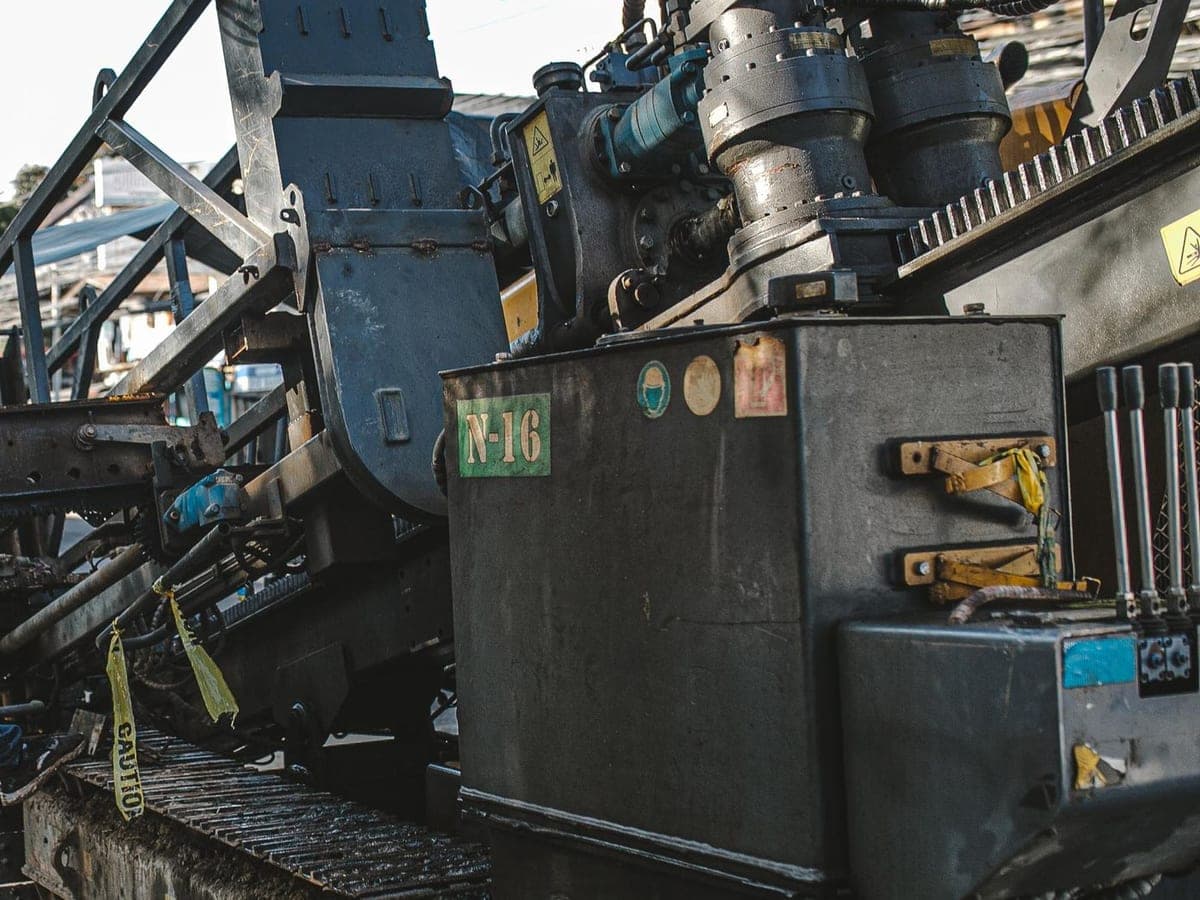
HDD — horizontal directional drilling
When is trenchless installation needed
There are situations where the open-trench method is not simply inconvenient — it is technically impossible or legally prohibited. A state-significance highway, a railway track, a river, or the protected zone of a cultural heritage site — in each of these cases an open excavation requires either months of approvals or carries unacceptable risks to existing infrastructure. Horizontal directional drilling (HDD) solves the task differently: a bore is driven under the obstacle by a steerable drill, with no traffic closure, no surface destruction and no large-scale earthworks.
LK Energy performs HDD work as part of comprehensive EPC projects — cable installation for solar power plants, water utility networks, and telecommunications routes. A quote for your site is usually ready within 24 hours on business days.
Advantages of HDD compared with the open-cut method
Digging a trench at a congested urban intersection or under the pavement of a highway is expensive — and not only in money. HDD differs across several key parameters:
| Criterion | HDD | Open trench |
|---|---|---|
| Traffic closure | Not required | Usually required |
| Surface restoration | Not required | 30–60% of the work budget |
| Execution time per 100 m | Approximately 1–3 working days* | Approximately 5–10 days* |
| Risk of damage to existing utilities | Lower (precise positioning) | Higher |
| Work in water-saturated soils | Possible with additional measures | More difficult, dewatering required |
| Weather dependency | Low | High |
*Approximate values. Actual timelines depend on geological conditions, crossing length, pipe diameter and the complexity level of the site.
The economic advantage of HDD is most pronounced where there is expensive surface paving, heavy traffic, or restrictions under occupational-safety and road-safety regulations.
Where HDD is applied
The horizontal directional drilling method is applied across a wide range of tasks:
Crossing transport infrastructure
- State and local highways, without closing traffic lanes
- Railway tracks (with approval and compliance with the technical requirements of railway authorities)
- Runways, technical access roads at restricted-access facilities
Water obstacles and environmentally sensitive zones
- Crossing rivers, canals, land-reclamation ditches
- Installation in zones with nature-protection or park status
- Areas where earthworks are prohibited (soils under a special protection regime)
Urban and industrial development
- Installation under building foundations and structures
- Dense development where open excavation is ruled out
- A through-passage across an industrial zone without stopping production
Types of utilities:
- Power cables 0.4 kV, 6/10 kV, 35 kV
- Fiber-optic communication lines (FOCL)
- Polyethylene water-supply pipelines (PE 100, PE 80)
- Low- and medium-pressure gas pipelines
- Pressure and gravity sewer pipelines
The technological process — three key stages
An HDD crossing is carried out in three consecutive phases, each with its own technical specifics.
Pilot boring (Pilot Bore)
The drilling rig forms a guide bore along the specified trajectory. The drill tool is fitted with a probe — a locating system tracks its position in real time (depth, angle, azimuth). The operator adjusts the course, steering around existing underground utilities and geological obstacles. Bentonite slurry is pumped under pressure to cool the drill tool, carry out cuttings and stabilize the borehole walls.
Reaming
After reaching the exit point, the pilot bore is enlarged to the required diameter — typically 1.3–1.5 times larger than the outer diameter of the pipeline. Depending on geological conditions and the final diameter, one or several passes are made with reamers of different sizes.
Pullback
The pipe or bundle of cables in a protective casing (PE pipe, steel casing) is attached via a swivel and pulling head to the drill string behind the final reamer and is pulled into the borehole as the drilling rig reverses. Bentonite slurry reduces friction and protects the pipe from damage during pullback.
Equipment we use
The result of an HDD crew's work depends directly on the class of the rig and the precision of the locating equipment.
Drilling rigs LK Energy operates its own fleet of Vermeer drilling rigs — from compact small rigs for crossings up to 100 m to powerful units for crossings of 300+ m and diameters over 400 mm. The specific rig is selected based on the agreed technical specification and the geological conditions of the site.
Locating systems The accuracy of an HDD crossing depends on the locator. We use systems that track the probe in real time with an error margin within the design tolerance.
Bentonite plant Automatic mixing and delivery of bentonite slurry is a mandatory part of the equipment. The concentration and flow rate of the slurry are selected for the specific soil type.
Reamers and drill heads A set of drill heads for different soils: soft rock (clay, loam), sandy soils, mixed conditions. Special tooling is used when needed for rock inclusions.
Diameters, depths, and crossing lengths
The technical capabilities of HDD depend on the equipment class and the geological conditions of the specific site. Below are approximate ranges for typical crossings:
| Parameter | Small rigs | Medium rigs | Large rigs |
|---|---|---|---|
| Borehole diameter | 50–200 mm | 200–500 mm | 500–1200 mm |
| Recommended depth | 1.5–15 m | 3–25 m | 5–40 m |
| Crossing length | up to 150 m | up to 400 m | up to 1000 m and more |
| Pulling force | up to 10 t | 10–40 t | 40–200 t |
*Parameters are approximate. Actually achievable characteristics are refined after analyzing geological conditions and designing the trajectory.
For installing a single 10 kV power cable in a PE pipe, a small- or medium-class rig is usually sufficient. For bundled installation of several pipes or a large steel casing, a medium- or large-class rig is required.
Geological conditions and their impact on HDD
Geology is the key factor determining the complexity, price and technology of an HDD crossing.
Favorable soils Clay, loam, and medium-density loamy soils are the optimal conditions for HDD. The borehole walls are stable, the bentonite slurry holds its shape well, and drilling speed is high.
Medium complexity Sand and sandy loam require an increased bentonite concentration for stabilization. The risk of wall collapse increases at greater depths. Careful slurry design is required.
High complexity Limestone, sandstone, and rock inclusions require special drill heads, more time and, as a rule, higher cost. Rock outcrops require preliminary assessment via control boreholes.
Additional risks
- Aquifers — can lead to borehole instability
- Undeclared underground utilities — risk of damage; reduced by test-pitting before starting
- Fill soils, industrial waste — unpredictable bearing capacity and composition
This is precisely why a geological survey of the site is not an option but a mandatory part of HDD preparation.
Project preparation — what precedes drilling
A quality HDD crossing begins long before the crew arrives on site. A typical preparation cycle includes:
- Geological survey
- geological exploration of the site (control borehole drilling or ground-penetrating radar scanning), soil condition analysis
- Topographic survey
- clarifying the terrain and the location of existing underground utilities (cables, pipes, manholes)
- Trajectory design
- calculating the Bore Plan: entry and exit angles, depth of cover, curvature radius (the minimum curvature radius is limited by standards for different pipe types)
- Approval with infrastructure owners
- Ukravtodor (State Road Agency), railway authorities, gas distribution companies, water utilities, municipal services — depending on the nature of the obstacle
- Site preparation
- staging area for the drilling rig, exit point, tanks for bentonite and cuttings
- Approval of project documentation
- with the relevant supervisory authorities in the case of higher-complexity sites
Project timelines
The duration of an HDD project is made up of several components, and it is impossible to state a fixed timeframe without knowing the site. An approximate breakdown:
- Geological survey and design
- 1–3 weeks depending on complexity
- Permit approvals
- (road, railway crossings): from 2 weeks to 2–3 months — the most unpredictable element
- Drilling itself
- (for a typical 100–200 m crossing): 2–5 working days*
- Pipeline pullback and final works
- 1–2 days
- Site handover, as-built documentation
- 1–2 weeks
*Depends on diameter, geology and the number of reamer passes.
The critical factor is the time needed to obtain permits from road or railway authorities — this process determines the overall project schedule and is started in parallel with the design work.
HDD cost — what determines the price
Publishing a fixed price per meter of HDD would mislead the customer. The actual cost of a crossing depends on a combination of several key factors:
- Pipeline diameter and type
- the larger and heavier it is, the more powerful the rig required and the more passes needed
- Crossing length
- as length increases, bentonite consumption and time both grow
- Geological conditions
- rock can increase the price 1.5–3 times compared with clay
- Depth of cover
- affects tool selection and borehole stability
- Complexity of approvals
- crossing Ukravtodor or railway infrastructure carries a separate fee for technical conditions
- Urgency
- an out-of-turn mobilization or winter conditions objectively increase the budget
- Situation with existing utilities
- a dense underground utility corridor requires slower drilling progress and additional test-pitting
*All price estimates are provided solely based on a site survey and review of the technical specification. Prices exclude VAT unless stated otherwise.
To get a quote for your crossing, fill in the form at the bottom of the page. A response is usually provided within 24 hours on business days.
What sets LK Energy's approach apart
Geology before drilling, not after We do not mobilize to a site without a prior soil survey. This protects against two common scenarios: an unexpected rock horizon in the middle of the crossing, or a frac-out (bentonite breaking to the surface) caused by an unstable sand layer.
Our own crew — not a middleman The work is carried out by certified HDD rig operators, not a subcontractor of unknown qualification. This directly affects navigation accuracy and adherence to the design trajectory.
Synergy with electrical installation and solar plants LK Energy is an EPC contractor with more than 20 years of experience (since 2005) in the power industry. For solar power plants of 1+ MW, an HDD crossing under a highway to the grid connection point is part of a single contract, not a separate subcontract with an independent contractor.
Construction and installation insurance If the customer requires it, we arrange construction and installation risk insurance under the terms of the contract — in particular for public-sector customers, where this is a mandatory requirement.
Experience with government tenders Preparing as-built documentation, working within the ProZorro system, and putting together packages for municipal customers and water utilities is standard practice at LK Energy, not the exception.
Questions and answers
How much does HDD cost per meter? The price per meter for the same type of pipeline can vary by roughly 3–5 times depending on geological conditions, diameter and the complexity of approvals. We do not publish a price list — it would not reflect the actual cost. We provide a quote for the specific site.
Can HDD be performed in rock? It is possible, but it requires special drilling tools and significantly affects cost and timelines. A preliminary geological survey is mandatory for an accurate estimate.
What is the minimum diameter for HDD? For installing cables in a protective pipe, the practical minimum is an outer pipeline diameter from 50 mm (for example, a PE pipe for fiber optics or a small cable). The final choice depends on the type of utility being installed.
What documents are needed to start HDD under a road? The standard package includes a permit from the road authority (Ukravtodor or the local asset holder), technical conditions for the crossing, project documentation, and an approved Bore Plan. The list may expand depending on the type of site.
Will HDD damage the road or sidewalk surface? When performed correctly — no. The work is carried out from an entry pit and exit point located outside the paved area. The only risk is a frac-out if bentonite pressure rises; this is prevented by the correct choice of technology and pressure control.
Is a geological report required for HDD? For simple crossings in known soil (based on data from adjacent sites), existing data is sometimes sufficient. For complex crossings (large diameters, lengths of 200+ m, rock zones), a full geological survey is mandatory.
How does HDD differ from pipe bursting (pneumatic piercing)? Piercing (a pneumatic mole) is an unguided method with no trajectory control: the piercing tool compacts the soil rather than removing it. Precise depth and direction are not guaranteed. It is used only for short crossings (up to 30–40 m) in soft soils and small diameters. HDD provides precise navigation, a controlled trajectory, and suitability for any diameter and complex conditions.
Who is liable for damage to existing utilities? Liability is defined in the contract. To minimize risk, test-pitting is performed at critical points before work begins, along with a mandatory cross-check against underground utility plans from the asset holders.
Request an HDD quote
To prepare a commercial proposal, we need to know:
- Type of utility (cable, water pipe, gas pipe, FOCL)
- Nature of the obstacle (road, railway, river, development)
- Approximate crossing length and desired depth of cover
- Address or coordinates of the site
- Availability of geological data or the need for a survey
Fill in the form below — provide your full name, phone number, email, site address and a description of the task (if available, attach a technical specification or crossing diagram). A quote is usually provided within 24 hours on business days.
Or contact us directly — see contact details in the "Contacts" section.
Also see related services: cable installation for solar power plants and EPC electrical installation work.
Any questions left?
Write or call us — we answer to the point. Preliminary reply within 24 hours.
+380 67 104 94 91